
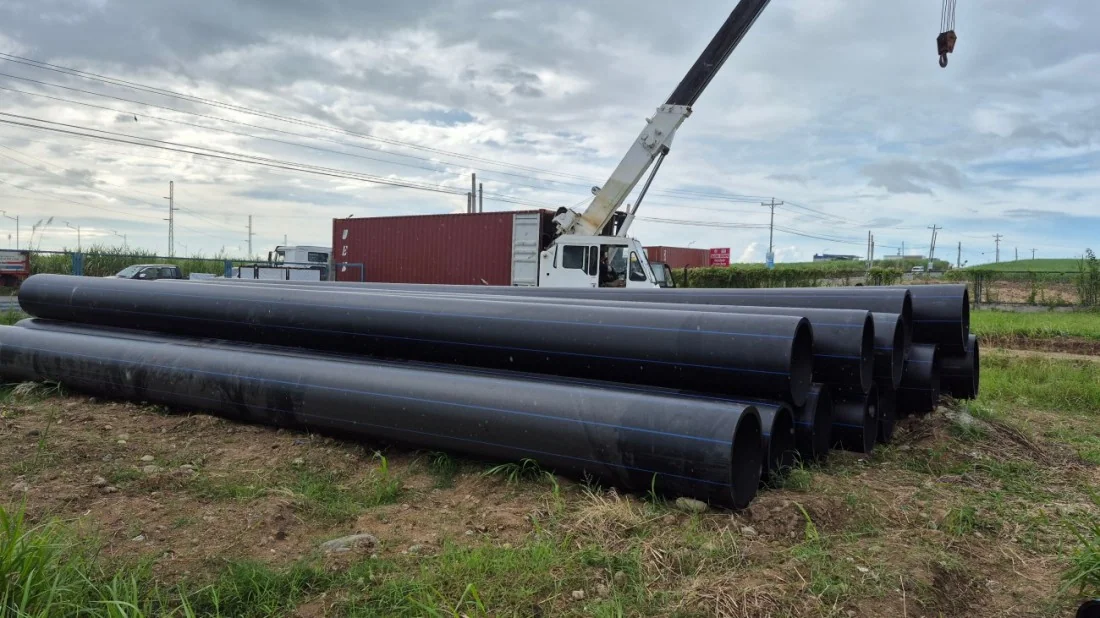
Plan Unloading Before the Truck Arrives
Check the delivery list for pipe OD, SDR or DR, lengths, and package weights. Set aside a firm, level unloading area with room for the truck and lifting equipment. Plan around overhead lines, public traffic, and people on foot.
- Protect the pipe during the lift. Use rated, wide fabric slings for overhead lifting, or suitable forks that support the load without point loading the pipe. A qualified crew should follow the site lift plan and keep people clear of the suspended load.
- Keep the pipe under control. Set lengths down on prepared supports. Dragging, dropping, and unloading by rolling pipe off the vehicle can damage ends and surfaces.
- Record the delivery condition. Count the packages against the packing list and check for torn wrapping, displaced restraints, or visible damage. Photograph suspect items and their pipe or batch marks before putting them into stock.
Puhui planning note. We commonly quote 5.8 m and 11.8 m straight lengths for export. Share the unloading limits early so we can confirm package dimensions and weights for your lift planner. See our HDPE export packing guide for the container checks.
Set Up Storage for the Gap Before Installation
Choose a firm, level, well-drained area clear of sharp rock, debris, traffic, and equipment routes. Give the crew room to retrieve a length without disturbing the rest of the stack.
- Support and restrain. Use wide, smooth, evenly arranged supports and suitable stops to prevent rolling. Confirm stack height and support spacing for the pipe OD, wall thickness, packaging and ground conditions. Keep flange faces and prepared ends clear of bearing loads.
- Separate sizes and batches. Set out bays by OD and SDR or DR. Keep the markings and lot identifiers visible. Use the packing list to link pipe bundles to fittings and to the first work area that needs them.
- Check storage after changes. After heavy rain, ground settlement or moving a stack, recheck the supports, restraints, end covers and identification before taking pipe out.
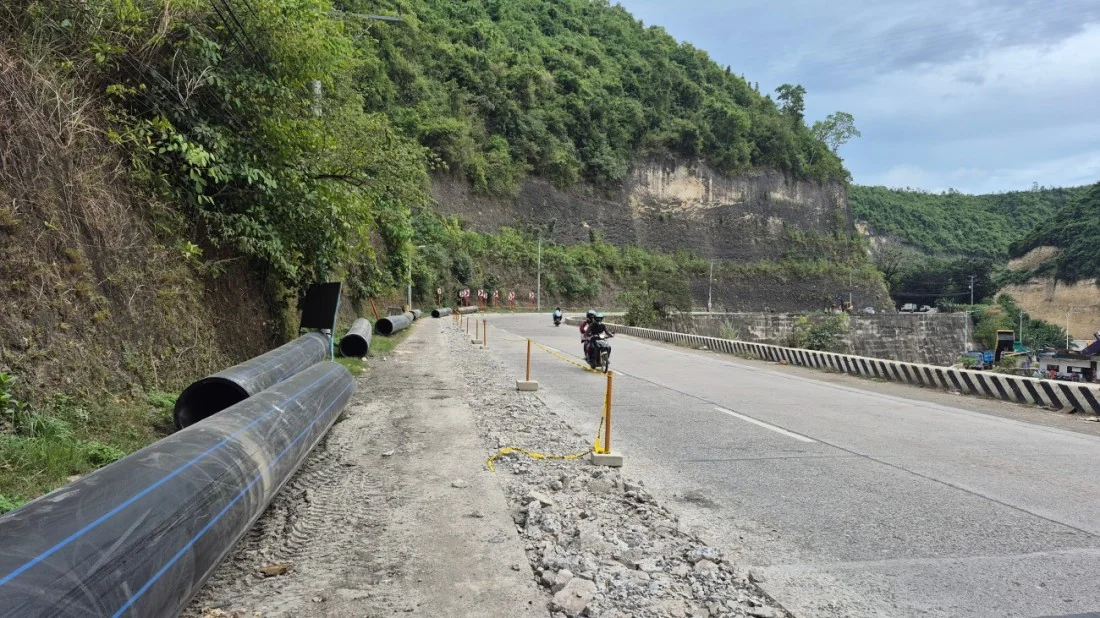
Account for Sun, Rain, and Dust
UV-stabilized black HDPE pipe is generally suitable for outdoor storage. For white, coloured, or co-extruded products, confirm the permitted exposure with Puhui for the exact product and expected storage period. Keep pipe away from direct heat, fuel and chemical spills. Protect open bores from mud, water and debris with suitable end covers.
Keep electrofusion fittings in their sealed original packaging under cover, in a clean, dry, shaded area. Retain protection on flange faces and gaskets until assembly. Cold weather makes pipe stiffer and calls for extra care to avoid impact. Wet surfaces can be slippery, so reassess handling conditions after rain.
Recheck the Pipe Before Installation or Fusion
Repeat these checks when the crew takes pipe out of storage, even if the shipment passed its receiving inspection.
| Check | What to Verify | When to Set the Item Aside |
|---|---|---|
| Pipe identity | OD series, SDR or DR, material grade and lot versus the line schedule | The marking is unclear or the pipe cannot be matched to the order. |
| Surface and ends | Cuts, gouges, dents, end damage, ovality and end shrinkage where applicable | Damage or dimensions fall outside the project or fitting limits, or the condition is uncertain. |
| Bore and joining surfaces | Water, mud, grit, oil or contamination on the bore and joint surfaces | The crew cannot clean and prepare the surfaces using the approved procedure. |
| Fittings and equipment | Pipe-to-fitting compatibility, fitting packaging, and the correct inserts or controller | The fitting or equipment cannot be matched to the planned joint. |
If a pipe end is damaged. Tag and set the length aside. Send a close-up with a scale, a photo of the complete pipe marking, and the location of the damage. Puhui can help your team identify the product and review the applicable acceptance criteria before it is cut or joined.
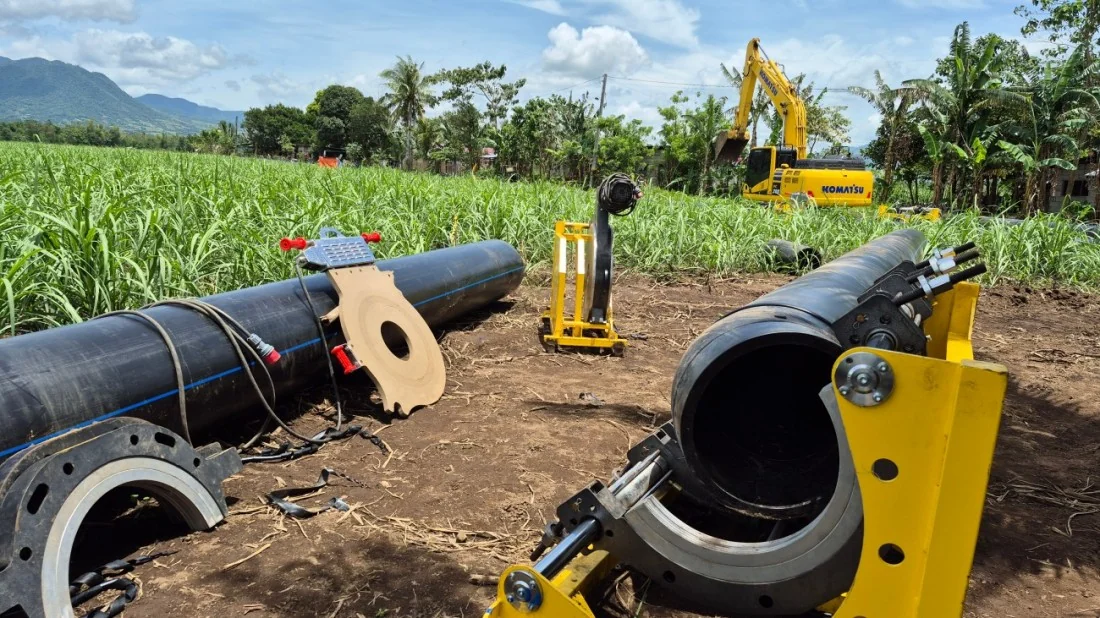
For socket joints, see how to prepare HDPE pipe for electrofusion.
Puhui project example. Puhui supplied DN630 SDR17 (PN10) HDPE pipe for a water-supply project in Bacolod City, Philippines. For a delivery like this, record both the size and the wall designation at the storage bay. That gives the crew a way to match the pipe to the specified fittings and fusion machine before moving a length into the work area.
Get Puhui’s Help With Your Delivery and Storage Plan
Send Your Pipe List and Site Conditions
Tell us the size, required pressure, quantity, standard and intended use. If installation is still weeks away, add the expected storage period and describe the laydown area. Puhui can quote the matching pipe and fittings and help you plan the packaging, receiving checks and temporary storage.
Request a Quote and Handling SupportSend site photos or pipe markings by email or WhatsApp.
- Email info@phhdpepipe.com
- WhatsApp +86 150 9310 0892