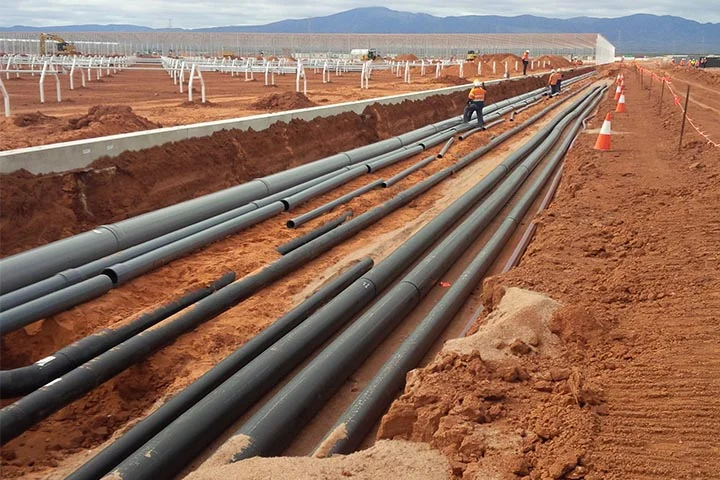
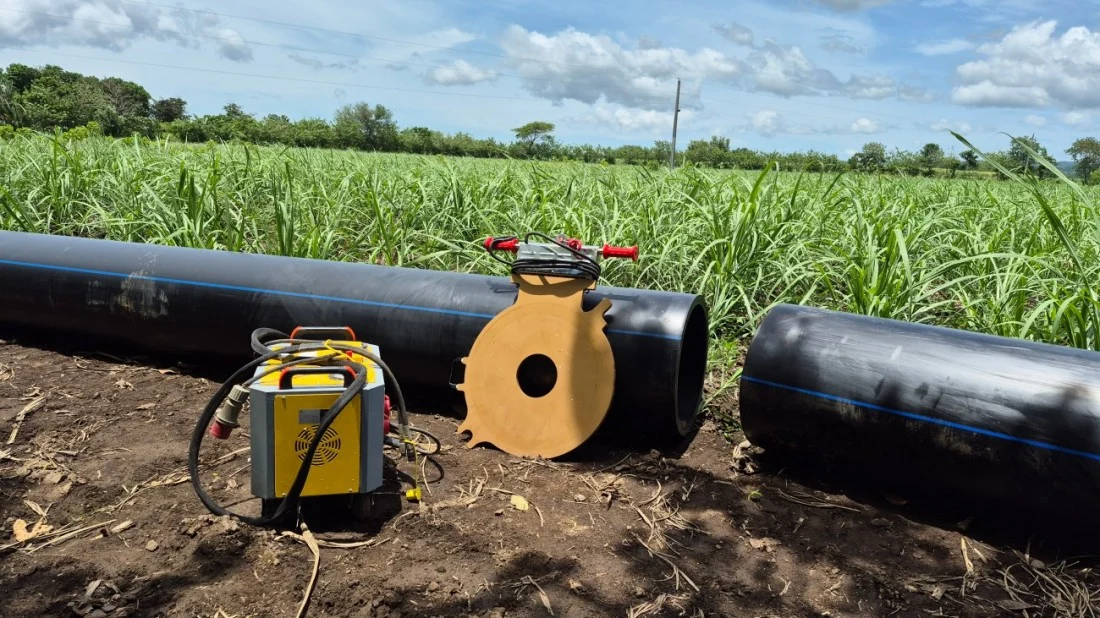
Carry ore slurry through long fused runs and keep high-wear bends accessible. Puhui quotes the straight pipe, branch fittings and replaceable flange spools as one package.
A slurry pump and pipeline work as a system. A larger bore lowers velocity at a given flow and can let coarse solids settle. A smaller bore can raise head loss and increase wear, especially where the flow changes direction.
Put the solids and peak pressure on the same schedule. That lets the buyer compare straight pipe, bends, drain tees and flanged replacement spools as one package.
Fused strings reduce the number of bolted joints along the route. Select the bore using minimum stable flow, the coarse particle fraction and the available pump head.
Show the branch angle, flushing or drain destination, pump flange drilling and available dismantling space on the drawing.
Transfer lines and local wear
Review pump discharge, elbows and downhill transitions separately from straight pipe. Large-radius bends and removable spools can change how a line is maintained. Identify high-wear sections by location and include access for inspection.
Pressure, bore and shutdown
Compare pressure during normal operation, surge and restart. For lines that can settle out during stoppages, include the flush-water source, drain route and restart conditions when selecting the bore.
Installation, operation & site conditions
Install straight runs and removable spools separately
Assemble long straight runs by butt fusion under the approved procedure. Locate bolted spools at accessible wear points. Support heavy valves and pump connections independently so their loads do not distort the PE flange faces.
Manage settling, washout and inspection
Identify where ore settles during a power loss and where the flush will discharge. Agree a baseline wall thickness and inspection locations at bends, pump outlets and downhill transitions. Use the same locations at each inspection to compare wear over time.
Design example
Long-radius bends and replaceable wear spools
A copper slurry line can use long-radius bends along open runs and accessible wear spools where the layout is tight. List straight pipe, bends and wear spools separately so the maintenance team can order replacements by end connection and face-to-face length.
What Puhui supplies and what to send
Supply package and quotation
Puhui can quote black mining HDPE pipe alongside sweep bends, fabricated branches, stub ends and butt fusion equipment. Send slurry concentration with its basis, particle-size distribution, density, flow range and the pump duty. Include quantities, lengths and destination.
Solids by weight or volume and particle size distribution
Put the pipe standard, resin designation and DR or SDR on the same schedule as the operating and surge envelope. Request batch-linked pipe test records, fitting dimensions and the formed-bend minimum wall. For lined spools, include liner material and wear data for comparable particles.
What is the main advantage of HDPE for long slurry lines?
Solid-wall HDPE lets crews build long fused sections and avoids rust in the pipe wall. Solids wear still governs bend and spool selection.
Can you size a slurry line from a water flow rate?
Slurry sizing also needs solids concentration, particle size, density and operating flow range. At fixed OD, a thicker wall changes bore, velocity and pump head.