
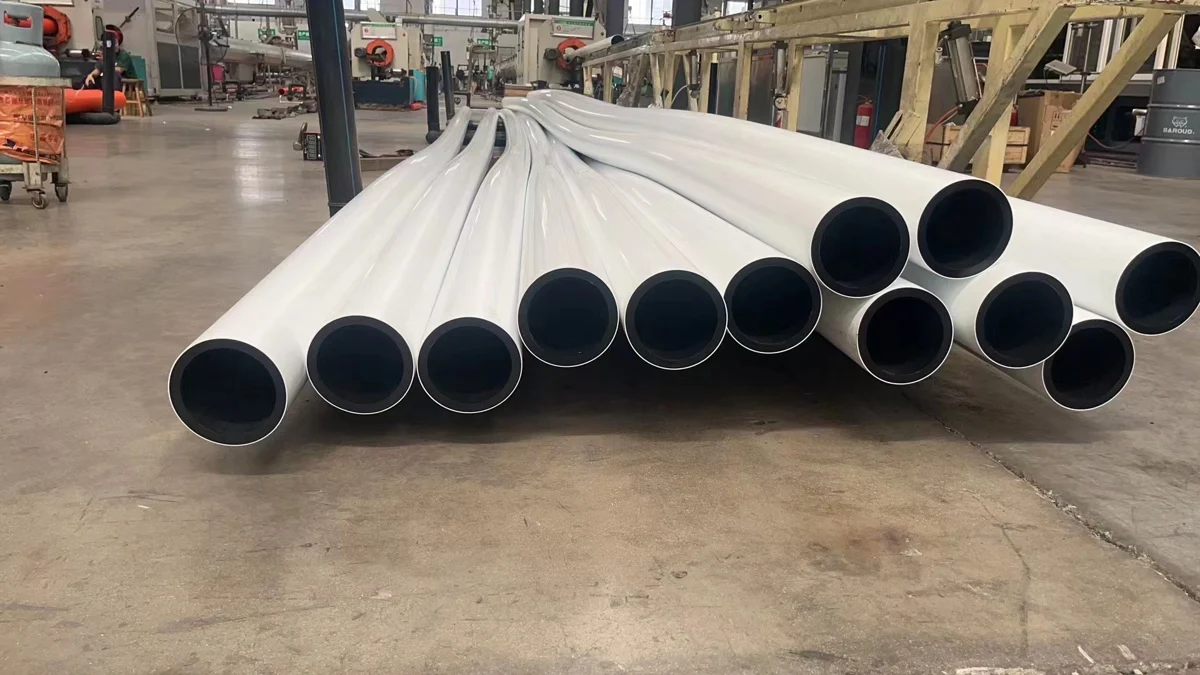
How the two layers work
Puhui extrudes the white exterior and the black inner layer together to form one pipe wall. Ask for a cross-section with the quote so you can check the layer thicknesses, usable bore and pressure-rated wall on the same drawing.
| Part of the pipe | What it does | What to ask for |
|---|---|---|
| White outer layer | Reflects more sunlight than a comparable black surface, which can lower the temperature of an exposed pipe. | White compound and its documented suitability for the expected outdoor exposure. |
| Black inner layer and pressure wall | The black layer forms the bore. The pressure rating is based on the qualified wall construction. | A cross-section showing both layers, their thicknesses and which material counts toward the pressure rating. |
| Bore in slurry service | The inner surface is exposed to wear from moving solids. | Bore material and any specified wear allowance, with the minimum structural wall that must remain in service. |
See the pipe come off the production line
The factory footage shows the white exterior and black bore at the open end. Compare that construction with the cross-section and the inspection and batch records required for your order.
Check temperature, pressure and wear for your route
A white surface can keep a sunlit pipe cooler. A smaller change in wall temperature can also reduce how far a long run expands and contracts. The effect depends on sun exposure, dust buildup and the fluid flowing through the line.
- Exposed raw-water, reclaim and temporary water lines. Check the pipe wall temperature at peak sun exposure, including low-flow or idle periods. Use the expected temperature range and the distance between restraints to check support spacing, sliding travel and anchor loads.
- Warm process water and heap-leach lines. Check chemical compatibility at the actual concentration and operating temperature. Use the temperature factor applicable to the offered pipe to check continuous pressure at the design wall temperature. Check pump surge separately.
- Tailings and concentrate lines. Share particle size, solids concentration and velocity to review bore wear. Mark bends, reducers and pump outlets for wear checks and identify where you may need replaceable spools.
Check the pressure rating at operating temperature. For metric PE100, start with the PN rating at 20°C (68°F). For IPS pipe, use the reference temperature and pressure on the offered data sheet. See how SDR, DR and pressure relate.
Match pipe ends, fittings and fusion procedures
- Butt fusion. Measure the actual OD and wall thickness at the ends. Check material compatibility, any wall-thickness transition and the approved procedure for the pipe and fittings.
- Electrofusion. Match the pipe’s actual OD and wall thickness to the fitting’s approved range. Ask the pipe and fitting suppliers to identify the approved fusion surface, peeling instructions and final OD limits for this bonded outer layer. Review electrofusion preparation.
- Flanged pump and valve connections. Match the flange adapter and backing ring to the mating face, bolt circle and pressure rating. Check bore alignment at slurry transitions to limit local wear.
Double-layer HDPE pipe for a Panama copper mine
Puhui supplied white-outside, black-inside co-extruded HDPE pipe to a copper mine in Panama and provided technical support during installation.
Check the size and pressure range
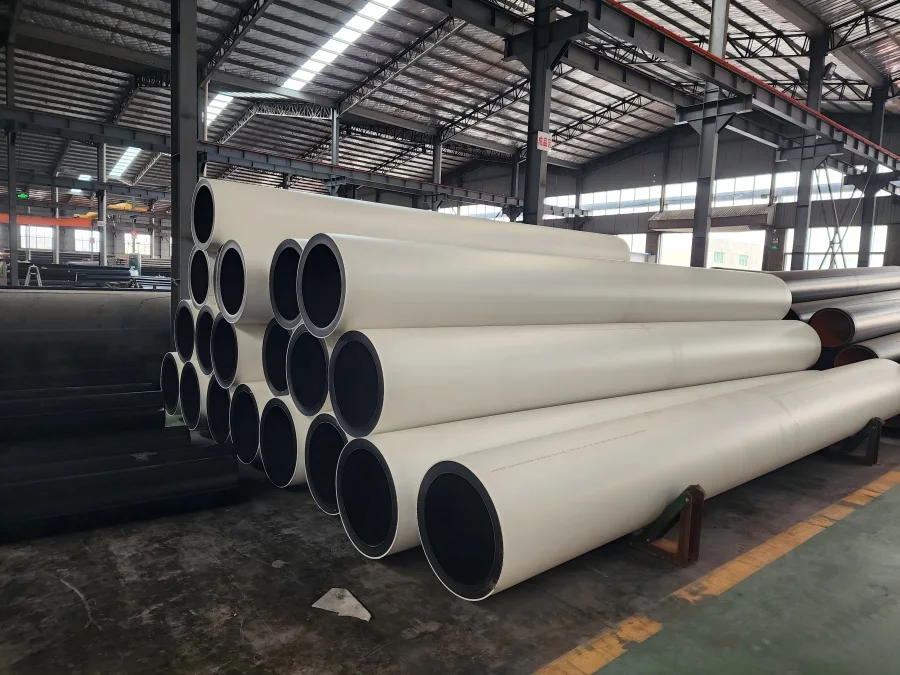
HDPE White Co-extruded Pipe
- Metric outside diameter
- 20–1800 mm
- PE100 wall series
- SDR 7.4 to SDR 33
- PE100 pressure classes
- PN 5 to PN 25, depending on size
Plan delivery and request a project quote
Send your pipe schedule or route drawing. Puhui can quote pipe, matching fittings and fusion equipment, with production lead time and packing for your destination.
- Pipe and fluid. Include OD and metric or IPS size series, SDR or design pressure, peak temperature, fluid and slurry solids data.
- Route and joints. Mark exposed and buried sections, pump and valve interfaces, and the fittings or fusion machines you need.
- Order and delivery. List lengths, quantities, destination and any required cross-section drawings, inspection reports or product certificates. See packing and container length options.